Direct answers
GPS dog fence questions in Naples and Southwest Florida
Straight answers first. Planning prices are $1,199–$1,499 for setup and training (November 2026 research, not a quote). A GPS fence is not a physical barrier and is not right for every dog.
Who installs GPS dog fences in Naples FL?
SWFL GPS Pet Fence installs and trains GPS wireless dog fences in Naples, Florida, and across Collier and Lee counties — including Bonita Springs, Estero, Fort Myers, Cape Coral, and Marco Island. We start with a free in-home demo and yard fit test, then map an app-based GPS boundary and train the dog. We do not bury wire or build a physical fence. Book a free demo to see it work in your yard.
How much does a GPS dog fence cost in Naples?
Our planning range for professional setup and training is $1,199–$1,499 in Naples and throughout our Southwest Florida service area. That figure is from our November 2026 research and is not a quote. A premium GPS dog collar is typically about $999 retail if you don't already have one, and the manufacturer may charge about $8.49–$9.95 a month for tracking. Extra dogs need extra collars. An optional Monthly Care Plan starts at $29/mo, with a higher tier around $49/mo — planning prices, cancel anytime. We'll confirm the collar, its warranty, and the price in writing before you buy. Small Yard & Indoor Solutions are a custom quote at the demo. Try the cost calculator for a side-by-side planning comparison.
What's the difference between a GPS dog fence and an invisible wire fence?
A GPS dog fence uses a collar and a boundary drawn on a map — no wire in the ground. A buried-wire electronic fence, sometimes called an “invisible” fence, uses a wire you bury around the yard. (Invisible Fence is a trademark of another company; it is not our name and is not a service we offer.) We only set up GPS wireless systems. We do not install buried-wire fences. GPS needs no digging, which is why people use it on HOA and canal lots; it is not a physical barrier, accuracy can drift several feet near water, buildings, or tree cover, and some products need a manufacturer tracking plan. Training is not optional. Read our GPS vs. buried-wire guide.
Does a GPS dog fence work in gated communities and HOAs?
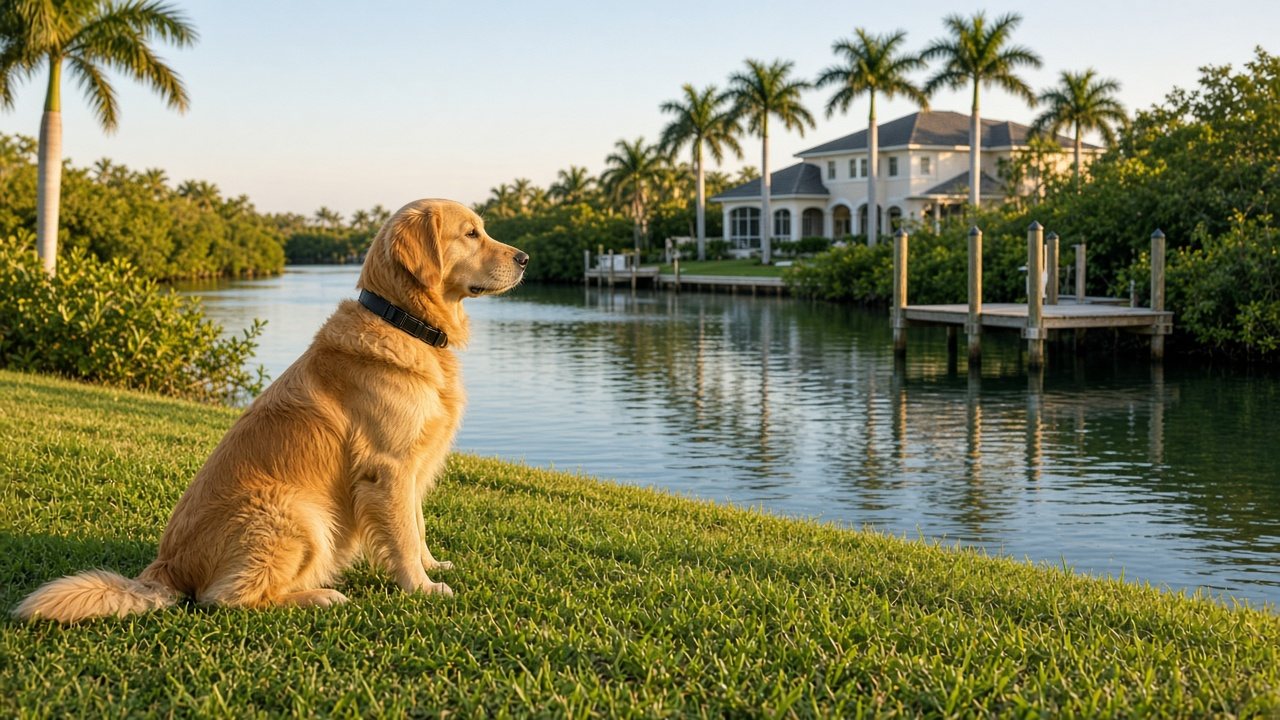
Often that's why people look at GPS collars here: some HOAs and gated communities restrict physical fences, and a GPS collar does not add a structure. Rules still differ by community, so check your documents and, if needed, ask the association. We don't promise any HOA will allow a given product. On canal lots, a GPS fence will not physically stop a dog from entering the water — training and supervision still matter. We show you the lot at a free demo. Read our HOA guide.
Halo vs SpotOn vs Fi — which GPS collar do you install?
Halo, SpotOn, and Fi are popular GPS collar brands and trademarks of their owners. We are an independent installer and trainer — not an official dealer of those companies, and we don't use those names as our own. We match a leading GPS collar to your yard and dog, and we tell you the exact model and its warranty before you buy. At the free demo we can walk through how leading systems typically differ — how the boundary is drawn, whether a monthly tracking plan is required, and whether tone-and-vibration-only training is available — without selling a single brand. We offer a service, not a collar brand.
What is a GPS dog fence?
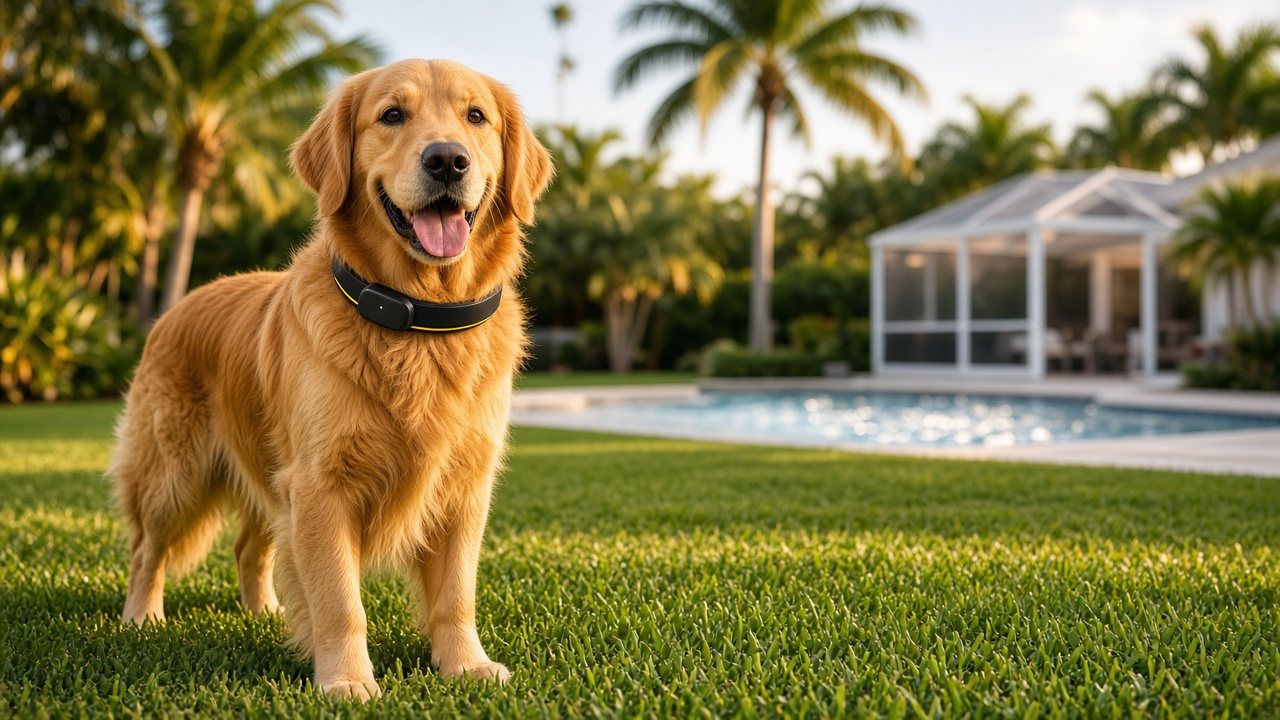
An app-based GPS fence uses a premium GPS dog collar and a boundary you draw on a map — usually in an app — instead of a wire in the ground or a physical fence. When the dog approaches the line, the collar warns, then may correct, according to the product and the settings. It is not a physical barrier, and it is not right for every dog.
Do you bury a wire or build a fence?
No. We only set up GPS wireless systems, plus indoor wireless keep-out solutions for small yards and indoor zones. We don't dig, we don't bury wire, and we don't build a physical fence. In Collier County, buried-wire work can fall under fence licensing, and we don't offer that.
Is a GPS fence right for every dog — and every yard?
No. Some dogs blow through corrections, some need a physical fence, and some properties don't have the space. Under about 1/4 acre is usually not a fit for a GPS yard fence; about 1/4–1/3 acre we test at the demo; about 1/3 acre and up is typically a good candidate, with a 15–20 ft buffer from the house, roads, and water. A GPS fence is not for indoor use. For condos, small lots, and indoor keep-out zones we offer Small Yard & Indoor Solutions. Training is part of what we do, and we'll be honest if we think it isn't a fit. A GPS fence is not a substitute for supervision.
See every question, including training and safety